GCSE Science: How to Score Top Marks Without Overstudying
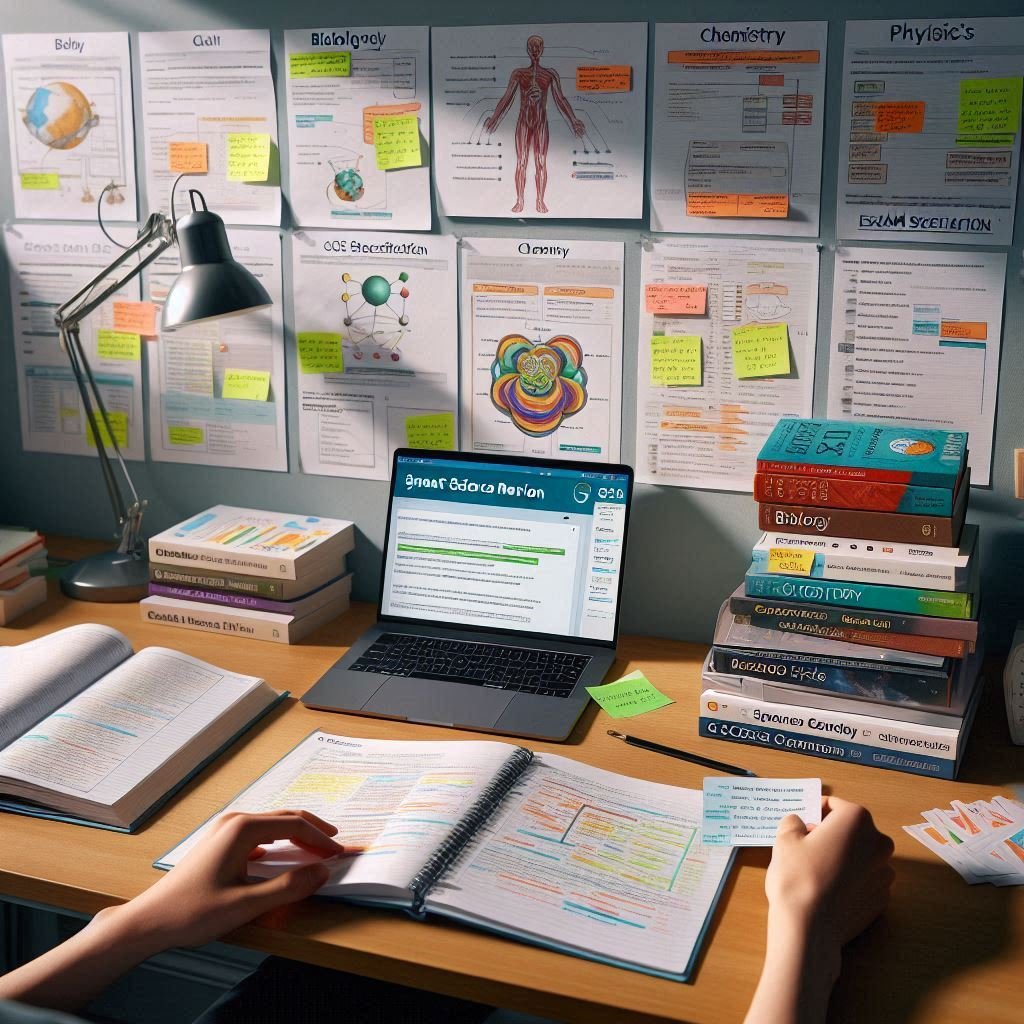
GCSE Science can feel overwhelming with multiple subjects (Biology, Chemistry, and Physics), tons of formulas, and endless past papers. But here’s the good news: you don’t have to spend all night revising to get top marks. The key is studying smarter, not harder.
In this guide, you’ll learn how to streamline your revision, focus on high-yield topics, and prepare efficiently.
1. Focus on the Exam Specification
Your exam boards' specification is your revision blueprint.
· Print or download it from the official site (AQA, Edexcel, OCR).
· Highlight each topic you need to know.
· Tick off areas as you revise.
Why it works: You avoid wasting time on topics that won’t be tested.
2. Prioritize High-Value Topics
Not all topics carry equal weight. Look at past papers to spot patterns:
· Commonly tested topics in Biology: cell structure, photosynthesis, genetics.
· Commonly tested in Chemistry: bonding, acids & bases, periodic table trends.
· Commonly tested in Physics: forces, electricity, energy transfers.
Tip: Spend more time mastering these recurring topics.
3. Use Active Recall, Not Passive Reading
Re-reading your notes feels productive but doesn’t stick.
Instead:
· Quiz yourself using flashcards (physical or apps like Anki).
· Try blurting: write everything you remember on a blank page, then check what you missed.
· Teach a concept to someone else (or your pet!).
4. Master Past Papers
· Start with untimed practice to build accuracy.
· Then switch to timed conditions to build speed.
· Review mark schemes they show exactly what examiners want.
Pro tip: Learn key scientific vocabulary used in mark schemes.
5. Use Visual Learning Tools
· Diagrams for processes like respiration or circuits.
· Mind maps for interconnected topics.
· Color-coded notes to distinguish between Biology, Chemistry, and Physics.
6. Short, Consistent Revision Sessions
· 25–30 minutes focused work + 5-minute break (Pomodoro Technique).
· 2–3 focused sessions a day is more effective than cramming.
7. Don’t Neglect Practical Skills
Practical questions are common and often overlooked.
· Review required experiments from your course.
· Understand the method, variables, and results.
8. Take Care of Exam-Day Basics
· Sleep well the night before.
· Bring all necessary equipment (calculator, ruler, pens).
· Skim through the paper first and answer easy questions before tackling harder ones.
Conclusion
Getting top marks in GCSE Science isn’t about endless hours of revision it’s about focusing on the right material, practicing effectively, and using smart learning strategies. By following this approach, you’ll save time, reduce stress, and boost your grades.
Our GCSE Science tutors specialize in targeted revision plans that maximize marks without burnout. Book your free session now.
Comments